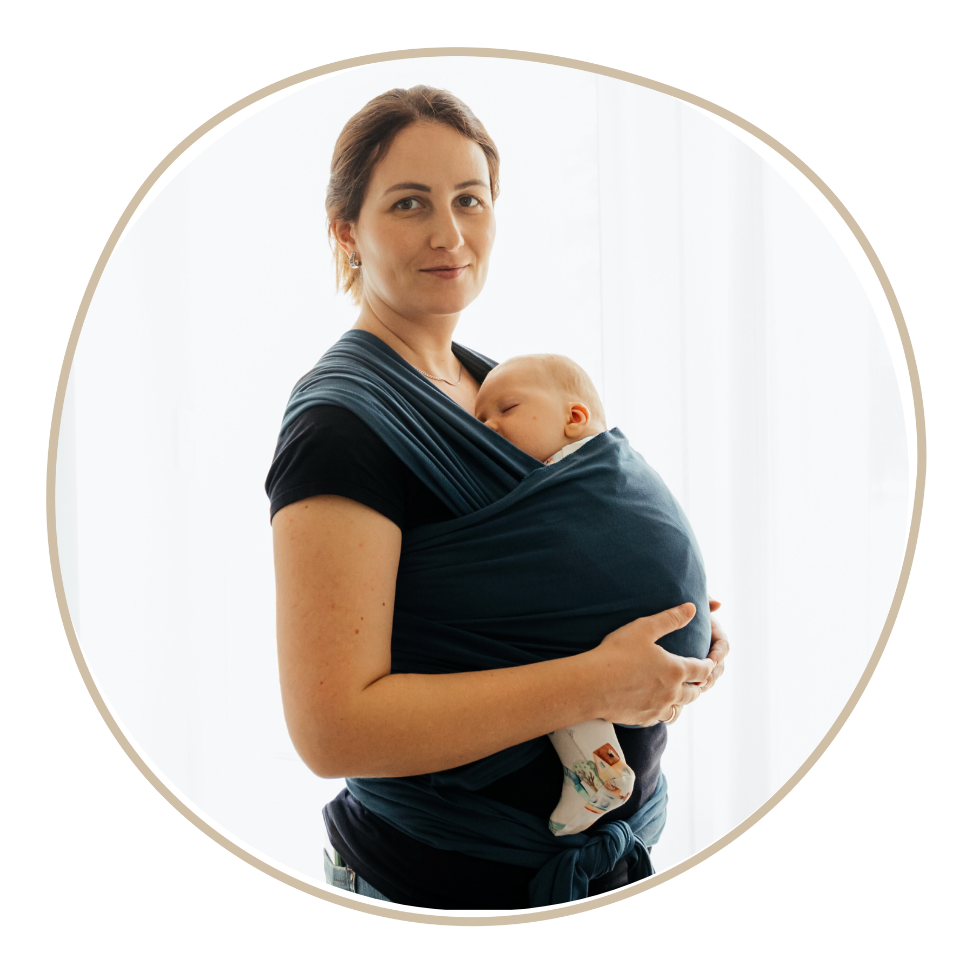
Tina Rapp
Family nurse, mother, and baby specialist
Table of Contents
- Ergonomic Carrying: Important Tips for Healthy Baby Carrying
- Why Is Ergonomic Carrying So Important?
- When and How Should I Carry My Baby in a Carrier?
- The Right Way to Carry: Ergonomic and Comfortable
- What Baby Carriers Are There and Which One Is Right for Me?
- How Do I Find the Right Baby Carrier for Me?
- Conclusion: Carrying as a Daily Adventure
Ergonomic Carrying: Important Tips for Healthy Baby Carrying
Carrying a baby has many benefits, both for the baby and the parents. Especially important is an ergonomic way of carrying that promotes the physical health and well-being of both. But why should one carry the baby ergonomically at all?
Carrying offers a strong bond, supports development, and provides security. The right way of carrying helps to protect the baby's spine and supports its bodily development. With the right baby carrier, carrying becomes a pleasant experience for the mother and her child.
Why is carrying in an way that is good for the body so important?
Ergonomic carrying is not only comfortable but also healthy. It ensures that your newborn sits in a natural posture that supports physical development while also preventing injuries such as hip dysplasia. A good baby carrier provides the necessary support for both the baby and the person carrying them. But what exactly are the benefits of carrying for the wearer and the baby?
-
Advantages for the wearer:
• Hands free in everyday life: You can move freely, shop, go for walks, or take care of tasks without trouble.
• Baby safely at your body: Your baby is always with you and no one can touch it without permission.
• Flexibility: You can stay flexible on all routes while on the go, without having to put the baby down. -
Benefits for the baby:
• Bonding and development-promoting: Carrying strengthens the emotional bond and fosters trust.
• Soothing and relaxing: The baby feels safe and secure.
• Supports motor development: Carrying aids the baby's physical growth.
• Helps with digestive issues: Carrying can help with colic and other regulatory problems.
When and how should I carry my baby in the sling?
There are no fixed rules about when you can start carrying, but basically you can put your baby in the baby carrier right after birth. Of course, it is important to pay attention to the well-being of the baby and your own needs. You should carry your baby as long as it feels good for both of you. So there is no maximum age for carrying, as long as it remains comfortable and pleasant for you both.
Carrying positions:
- Front carry (for newborns): The baby's head and neck should be well supported.
- Back carry (from about 6 months): Your baby should be able to hold their head securely.
- Hip carry (from about 8 months): Especially for shorter distances, as it is less back-friendly.
The correct way to carry: Ergonomic and comfortable
For a healthy posture, it is important that your baby sits in the so-called squat-spread position:
- The baby's legs are spread apart.
- The baby's knees are the highest point, the bottom is the lowest point.
- This posture prevents strain on the spine and ensures a healthy posture.
The ideal height: “head-kiss height”
- Your baby should sit so that you can kiss your baby's head without bending over too much.
- This is not only comfortable for the baby but also for your back.
What carrying aids are there and which one is right for me?
There are a variety of carriers that differ in terms of comfort, handling, and the position in which the child is carried. The choice of the right carrier depends on various factors, such as your baby's age, your own comfort, and how often it will be used. Here is an overview of the most common carriers:
Foldable content
Elastic carrying cloth
- Carrying positions: belly, back, hip
- Special features: Tied, many different tying and carrying methods, soft and also suitable for premature babies
- Weight indication: From birth up to 9-15 kg (depending on manufacturer)
Woven baby sling
- Carrying positions: belly, back, hip
- Special features: Tied, sturdier than the stretchy baby sling, supports more weight
- Weight indication: From birth until the end of the carrying period
Pre-tied carrying cloth
- Carrying positions: Front (on the belly)
- Special features: No tying method required, carrying position only in front on the belly
- Weight indication: From birth up to 9-13 kg (depending on manufacturer)
Mei Tai
- Carrying positions: belly, back, hip
- Special features: integrated back panel, no plastic buckles, entirely made of cloth
- Weight indication: from birth until the end of the carrying period
Half buckle
- Carrying positions: belly, back, hip
- Special features: waist belt with buckle, shoulder straps for tying
- Weight indication: from birth until the end of the carrying period
Fullbuckle
- Carrying positions: belly, back, hip
- Special features: multiple adjustment options with buckles, similar to a backpack
- Weight indication: from birth until the end of the carrying period
Onbuhimo
- Carrying positions: Back
- Special features: Back carrier, suitable for "Hop on-Hop off" tours from crawling age
- Weight indication: From sitting age until the end of the carrying period
Ring Sling
- Carrying positions: belly, back, hip
- Special features: short carrying cloth, fastened and adjusted with two rings
- Weight indication: from birth until the end of the carrying period
Circle
- Carrying positions: Hip (with two loops also belly)
- Special features: Loops to carry the child sideways on the hip or as a front carrier with an overcloth
- Weight indication: From birth until the end of the carrying period
Hip carrier
- Carrying positions: Hip
- Special features: Adjustable carry, diagonal over the shoulder, for shorter distances
- Weight indication: From sitting age until the end of the carrying period
Hip seat
- Carrying positions: Hip
- Special features: Waist belt with padded seat, ideal for the baby to sit on the hip when it can sit independently
- Weight indication: From sitting age until the end of the carrying period
Each of these carrying aids has its own advantages and disadvantages. The right choice depends on how and how long you want to carry your baby. Pay attention to your own comfort as well as that of your baby, and you should also always heed the manufacturer's instructions regarding weight and age.
How do I find the right carrying aid for me?
There is no carrying aid that is equally suitable for all parents and babies. Finding the right carrying aid requires a bit of testing and trying out. It is similar to choosing the right shoe: only by trying can you ensure that both you and your baby feel comfortable.
Tips to Try Out:
-
Try different carries on: Move with your baby and pay attention to how it feels.
-
Pay attention to comfort:
Your back should be relieved and the baby should sit in a way that supports healthy posture.
-
Also test the ease of movement: Check whether you can move freely without the carrier becoming uncomfortable.
These tips do not replace a carrying consultation, they serve only as guidance. A carrying consultation is useful and saves a lot of money by avoiding wrong purchases. If you are unsure, ask a carrying consultant.
Conclusion: Wearing as a daily adventure
With the right carrying aid, you can share many wonderful moments together. Carrying not only strengthens the bond between you and your baby but also makes everyday life much easier. If you and your baby choose to carry, you will both enjoy it for a long time – so get into the baby carrier and the day will be good!
Mehr Informationen über Tina Rapp findest du hier.